
Contents
- 🔍 Introduction to Laser Levels
- 📐 History of Laser Levels
- 🔧 How Laser Levels Work
- 📈 Applications of Laser Levels
- 🔩 Construction and Surveying with Laser Levels
- 📊 Accuracy and Precision of Laser Levels
- 🔋 Types of Laser Levels
- 🤔 Controversies and Limitations of Laser Levels
- 📈 Future Developments in Laser Level Technology
- 📊 Economic Impact of Laser Levels
- 🌐 Global Adoption of Laser Levels
- Frequently Asked Questions
- Related Topics
Overview
The laser level, a device that projects a level line or point onto a surface, has revolutionized the construction industry with its precision and efficiency. First introduced in the 1990s by companies like Leica Geosystems and Bosch, laser levels have evolved significantly, with advancements in diode technology and microelectronics. Today, these tools are indispensable for professionals and DIYers alike, offering features like self-leveling, tilt detection, and wireless connectivity. With a Vibe score of 80, laser levels have become a cultural phenomenon, symbolizing the intersection of technology and craftsmanship. However, controversy surrounds the accuracy and reliability of certain models, with some critics arguing that cheaper alternatives compromise on quality. As the industry continues to innovate, with companies like DeWalt and Makita pushing the boundaries of laser level technology, one thing is certain: the future of construction will be shaped by these precise and powerful tools. With over 10 million units sold worldwide in 2022, the laser level market is expected to grow exponentially, influencing the way we build and create.
🔍 Introduction to Laser Levels
The laser level is a revolutionary tool that has redefined precision alignment in various industries, including surveying and construction. With its ability to project a fixed red or green beam in a plane about the horizontal and/or vertical axis, the laser level has become an essential instrument for ensuring accuracy and precision. As discussed in Laser Technology, the development of laser levels has been influenced by advancements in Photonics and Optics. The use of laser levels has also been explored in Civil Engineering and Architecture.
📐 History of Laser Levels
The history of laser levels dates back to the 1970s, when the first laser level was introduced. Since then, the technology has undergone significant improvements, with advancements in Diode Lasers and Optical Fibers. As noted in History of Lasers, the development of laser levels has been shaped by the contributions of pioneers such as Theodore Maiman and Gordon Gould. The impact of laser levels on Surveying and Construction has been profound, enabling the creation of more accurate and complex structures.
🔧 How Laser Levels Work
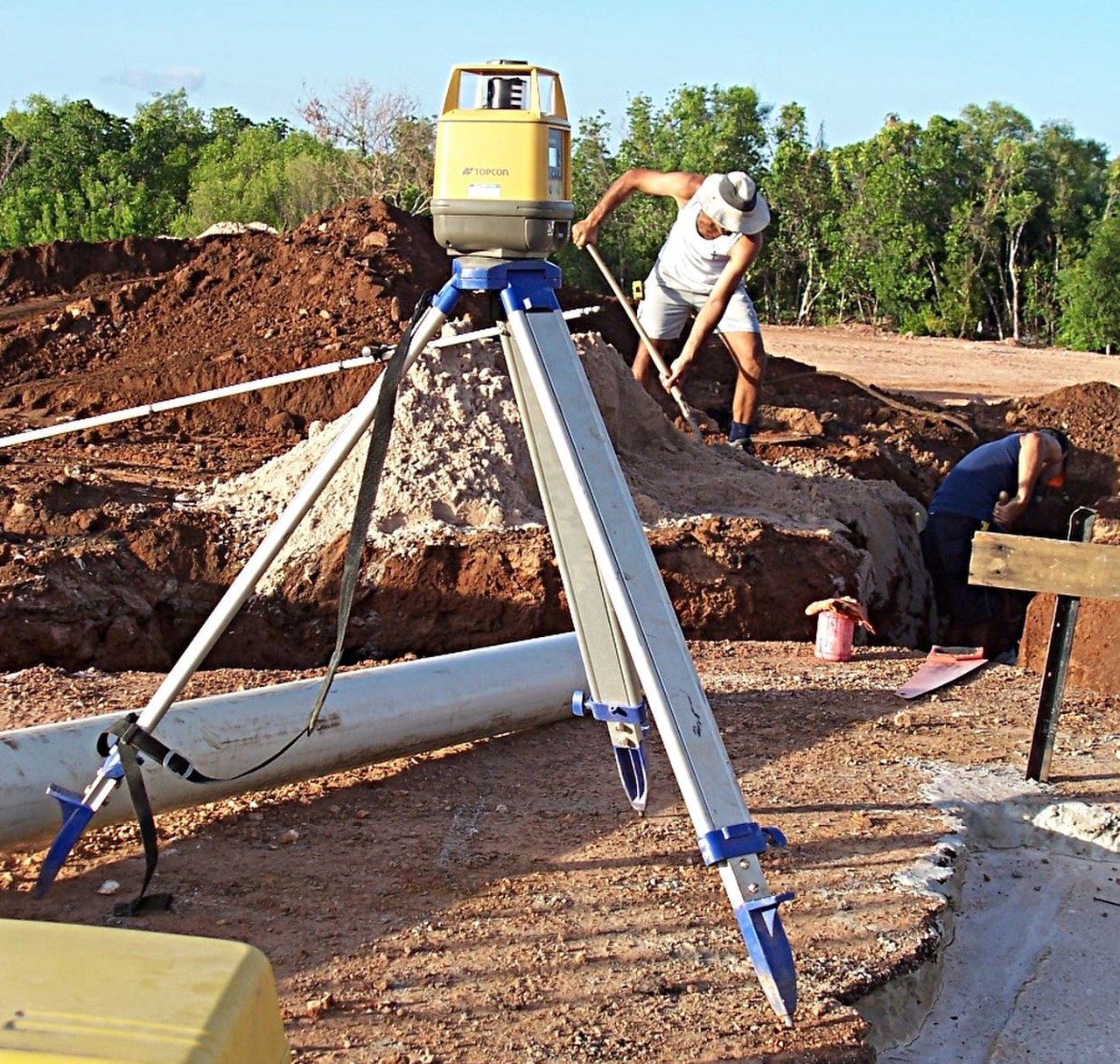
So, how do laser levels work? The tool consists of a rotating laser beam projector that can be affixed to a tripod. The device is leveled according to the accuracy of the device and projects a fixed red or green beam in a plane about the horizontal and/or vertical axis. As explained in Laser Physics, the laser beam is generated by a Laser Diode and is then projected through a Beam Splitter. The resulting beam is then detected by a Photodetector, which provides feedback to the device to ensure accuracy. This technology has been applied in various fields, including Geodesy and Photogrammetry.
📈 Applications of Laser Levels
The applications of laser levels are diverse and widespread. In construction, laser levels are used to ensure that buildings are properly aligned and leveled. In surveying, laser levels are used to determine the position and elevation of points on the Earth's surface. As discussed in Geographic Information Systems, the use of laser levels has enabled the creation of more accurate and detailed maps. The technology has also been used in Archaeology to excavate and document historical sites.
🔩 Construction and Surveying with Laser Levels
In construction and surveying, laser levels are used to ensure that buildings and structures are properly aligned and leveled. The tool is particularly useful in large-scale construction projects, where accuracy and precision are crucial. As noted in Building Information Modeling, the use of laser levels has enabled the creation of more accurate and detailed models of buildings and structures. The technology has also been applied in Urban Planning to design and develop more efficient and sustainable cities.
📊 Accuracy and Precision of Laser Levels
The accuracy and precision of laser levels are unparalleled. With an accuracy of ±0.5 mm/m, laser levels are capable of providing precise measurements and alignments. As explained in Precision Engineering, the accuracy of laser levels is achieved through the use of advanced Optical Components and Electronic Circuits. The technology has been used in various fields, including Aerospace Engineering and Automotive Engineering.
🔋 Types of Laser Levels
There are several types of laser levels available, including rotary laser levels, line laser levels, and dot laser levels. Each type of laser level has its own unique characteristics and applications. As discussed in Laser Level Types, the choice of laser level depends on the specific requirements of the project. The technology has also been used in Medical Imaging to create detailed images of the body.
🤔 Controversies and Limitations of Laser Levels
Despite the many advantages of laser levels, there are also some controversies and limitations associated with the technology. One of the main limitations of laser levels is their sensitivity to environmental factors such as temperature and humidity. As noted in Environmental Factors, the accuracy of laser levels can be affected by changes in temperature and humidity. The technology has also been criticized for its potential impact on Eye Safety.
📈 Future Developments in Laser Level Technology
The future of laser level technology is exciting and promising. With advancements in Artificial Intelligence and Machine Learning, laser levels are likely to become even more accurate and precise. As explained in Future of Lasers, the development of new laser technologies, such as Quantum Lasers, is expected to revolutionize the field of surveying and construction. The technology has also been explored in Space Exploration to enable more accurate and precise navigation.
📊 Economic Impact of Laser Levels
The economic impact of laser levels has been significant. The technology has enabled the creation of more accurate and complex structures, which has led to increased efficiency and productivity in the construction and surveying industries. As discussed in Economic Impact, the use of laser levels has also led to cost savings and reduced waste. The technology has been used in various fields, including Infrastructure Development and Disaster Response.
🌐 Global Adoption of Laser Levels
The global adoption of laser levels has been widespread. The technology is used in almost every country around the world, and its applications are diverse and varied. As noted in Global Adoption, the use of laser levels has enabled the creation of more accurate and detailed maps, which has led to improved navigation and communication. The technology has also been used in Environmental Monitoring to track changes in the environment.
Key Facts
- Year
- 1995
- Origin
- Switzerland
- Category
- Technology
- Type
- Device
Frequently Asked Questions
What is a laser level?
A laser level is a control tool consisting of a rotating laser beam projector that can be affixed to a tripod. The tool is leveled according to the accuracy of the device and projects a fixed red or green beam in a plane about the horizontal and/or vertical axis. As discussed in Laser Technology, the development of laser levels has been influenced by advancements in Photonics and Optics. The use of laser levels has also been explored in Civil Engineering and Architecture.
How do laser levels work?
Laser levels work by projecting a fixed red or green beam in a plane about the horizontal and/or vertical axis. The device is leveled according to the accuracy of the device and uses a rotating laser beam projector that can be affixed to a tripod. As explained in Laser Physics, the laser beam is generated by a Laser Diode and is then projected through a Beam Splitter. The resulting beam is then detected by a Photodetector, which provides feedback to the device to ensure accuracy. This technology has been applied in various fields, including Geodesy and Photogrammetry.
What are the applications of laser levels?
The applications of laser levels are diverse and widespread. In construction, laser levels are used to ensure that buildings are properly aligned and leveled. In surveying, laser levels are used to determine the position and elevation of points on the Earth's surface. As discussed in Geographic Information Systems, the use of laser levels has enabled the creation of more accurate and detailed maps. The technology has also been used in Archaeology to excavate and document historical sites.
What are the advantages of laser levels?
The advantages of laser levels include their high accuracy and precision, ease of use, and versatility. Laser levels are capable of providing precise measurements and alignments, making them an essential tool in construction and surveying. As noted in Precision Engineering, the accuracy of laser levels is achieved through the use of advanced Optical Components and Electronic Circuits. The technology has been used in various fields, including Aerospace Engineering and Automotive Engineering.
What are the limitations of laser levels?
The limitations of laser levels include their sensitivity to environmental factors such as temperature and humidity, and their potential impact on eye safety. As noted in Environmental Factors, the accuracy of laser levels can be affected by changes in temperature and humidity. The technology has also been criticized for its potential impact on Eye Safety.
What is the future of laser level technology?
The future of laser level technology is exciting and promising. With advancements in Artificial Intelligence and Machine Learning, laser levels are likely to become even more accurate and precise. As explained in Future of Lasers, the development of new laser technologies, such as Quantum Lasers, is expected to revolutionize the field of surveying and construction. The technology has also been explored in Space Exploration to enable more accurate and precise navigation.
What is the economic impact of laser levels?
The economic impact of laser levels has been significant. The technology has enabled the creation of more accurate and complex structures, which has led to increased efficiency and productivity in the construction and surveying industries. As discussed in Economic Impact, the use of laser levels has also led to cost savings and reduced waste. The technology has been used in various fields, including Infrastructure Development and Disaster Response.